Tree Trimming vs Pruning: Key Differences
Trimming and pruning aren't the same thing. Here's how to tell which one your trees actually need — and when to call a pro.
Share:
Summary:
If you’ve ever called a tree company and weren’t sure whether to ask for “trimming” or “pruning,” you’re not alone. Most people use both words to mean the same thing — but they’re not. They serve different purposes, they’re done at different times of year, and using the wrong approach on the wrong tree can cause real problems down the road. Whether you’re dealing with an overgrown oak in Massapequa or a maple that’s been crowding your deck in Garden City, understanding the difference is the first step to making a good call. Here’s what you need to know.
Tree Trimming vs. Tree Pruning: What's Actually Different
The simplest way to think about it: trimming is about how a tree looks, pruning is about how a tree lives. Tree trimming focuses on shape, size, and appearance — cutting back overgrown branches that are making a tree look unruly, encroaching on your roofline, or blocking light to your yard. Pruning goes deeper. It targets dead, diseased, crossing, or structurally weak branches with the tree’s long-term health as the primary goal.
Both services improve a tree. But they’re driven by different questions. Trimming asks, “Does this tree look right?” Pruning asks, “Is this tree healthy?” On a Nassau County property where mature trees are growing close to structures, fences, and neighboring lots, knowing which question to ask first can make a significant difference in both cost and outcome.
Tree Limb Removal: When It's More Than Just a Trim
There’s a third category that often gets lumped in with trimming and pruning, and it’s worth separating out: tree limb removal. Limbs are the larger, primary structural wood of a tree — not the small secondary branches you’d clean up during a routine trim. Removing a limb is a more significant intervention, and it requires a careful read of how the tree will respond before any cut is made.
In Nassau County, limb removal comes up most often after storm damage. Long Island’s exposure to nor’easters and the occasional tropical storm — anyone who lived here through Sandy in 2012 or Isaias in 2020 knows the drill — means that large limbs get cracked, partially broken, or left hanging at dangerous angles. A hanging limb over a roof in Oyster Bay or a split branch leaning toward a fence in Freeport isn’t just an eyesore. It’s a liability.
But limb removal isn’t only a storm response. Sometimes a limb has grown into a position that’s putting uneven stress on the tree’s structure. Sometimes it’s developed included bark — a weak union where two branches have grown together without proper attachment — and it’s only a matter of time before it fails on its own. A professional assessment can spot these issues before they become emergencies.
The key thing to understand is that removing a large limb changes a tree’s weight distribution and can affect how it grows for years afterward. The cut placement matters. A proper cut is made just outside the branch collar — the slightly raised area where the limb meets the trunk — which allows the tree to seal the wound naturally. A flush cut or a stub left behind creates an entry point for decay and disease. This is one of the clearest reasons why limb removal is not a DIY job, especially on the mature, established trees that are common across Nassau County’s older neighborhoods.
Tree Branch Removal: Routine Maintenance That Protects Long-Term Health
Branch removal is the more routine side of the equation — and it’s something most trees on Long Island benefit from on a regular basis. Branches are the smaller secondary growth that extend from the main limbs, and over time they can become dead weight, disease carriers, or structural hazards if left unchecked.
Dead branches are the most obvious target. A dead branch doesn’t fall on a schedule. It can come down during a summer thunderstorm, under the weight of a winter ice load, or on a calm day with no warning at all. Removing dead wood proactively is one of the most straightforward things you can do to reduce risk on your property — and it’s especially relevant in Nassau County’s densely landscaped suburban lots, where a falling branch has a short distance to travel before it hits something you care about.
Beyond dead wood, branch removal also addresses crossing branches (which create wounds where they rub against each other), branches that are directing growth into problematic areas, and branches that are showing early signs of disease. On Long Island, that last point has become increasingly important with the spread of beech leaf disease, which has been moving through Nassau County’s older neighborhoods and affecting established American beech trees. Catching and removing affected branches early can slow the spread and extend a tree’s life.
Timing matters here too. For most deciduous species in Nassau County’s climate zone — the area sits in USDA Zone 7a/7b — late winter to early spring is the preferred window for branch removal. Trees are dormant, which means less stress on the tree and a lower risk of disease transmission through fresh cuts. Oak trees are a particular case worth noting: pruning oaks between April and July significantly increases the risk of oak wilt, a fungal disease that can kill a tree within a season. If you have oaks on your property in Hicksville, Mineola, or anywhere else in Nassau County, timing your branch work for late fall through early spring isn’t just a preference — it’s genuinely important.
Professional Tree Pruning Service: What It Does for Your Property
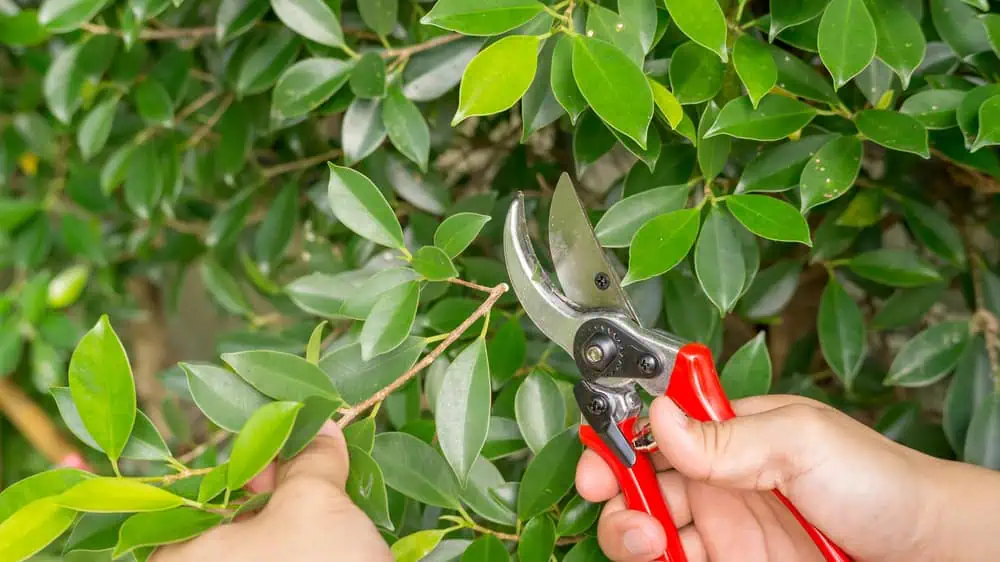
A professional tree pruning service does more than clean up a tree’s appearance. Done correctly and at the right time of year, pruning strengthens a tree’s structure, reduces disease risk, and can meaningfully extend its life. For Nassau County homeowners who have mature trees — many of which were planted during the post-WWII development boom and are now 50 to 75 years old — that kind of care isn’t optional. These trees are assets, and they need to be treated like it.
There’s also a practical property value argument. Well-maintained trees and healthy landscaping can increase a home’s value by as much as 19 percent. That’s not a small number in a market where Nassau County home values are among the highest in New York State.
How to Tell If Your Tree Needs Pruning or Just a Trim
This is the question most homeowners are actually trying to answer when they start searching online. The honest answer is that it depends on what’s driving your concern — and sometimes a tree needs both.
If the issue is purely visual — branches are growing out of shape, the canopy is getting too wide, or the tree is starting to block a view or crowd a structure — trimming is likely the right call. A good trim restores the shape, clears the overgrowth, and keeps the tree looking proportional to your property. It’s maintenance, not intervention.
If you’re noticing something more concerning — dead branches, discolored leaves, unusual growth patterns, bark damage, or branches that seem structurally weak — that’s a signal to think about pruning. These are signs that the tree’s health is the issue, not just its appearance. Pruning in this context is about removing the problem areas before they spread or fail.
The tricky part is that some of the most serious structural issues aren’t visible from the ground. Co-dominant stems — where two main trunks grow side by side and compete for dominance — can look perfectly healthy until one of them splits under load. Included bark, where branches have grown together without a strong union, is nearly impossible to spot without getting closer to the tree. This is where a professional assessment adds real value. An experienced arborist can identify what you can’t see and recommend the right service for what’s actually going on, not just what’s visible from your back porch.
For Nassau County properties specifically, this matters more than it might in a rural setting. When a tree is growing 10 feet from your house in Garden City or overhanging your neighbor’s fence in Great Neck, the margin for error is small. Getting the right service at the right time isn’t just about the tree — it’s about managing risk on a property where there’s a lot at stake.
When to Schedule Tree Trimming and Pruning on Long Island
Timing is one of the most misunderstood parts of tree care, and it’s also one of the areas where well-meaning DIY attempts tend to go wrong. The general rule — prune during dormancy, trim as needed — is a reasonable starting point, but Nassau County’s specific climate and tree species mix adds some important nuance.
For most deciduous trees on Nassau County properties, late winter through early spring is the sweet spot. Trees are dormant, which means cuts are less stressful, disease transmission through fresh wounds is lower, and the leafless canopy makes it easier to assess the tree’s structure accurately. This is the window we work in most heavily for pruning work, and it’s when most homeowners start scheduling ahead of the spring growing season.
Summer trimming is common and generally fine for shaping and light maintenance. Trees are actively growing, which means they respond quickly, but it also means you’re working with a full canopy that makes structural assessment harder. Heavy pruning during summer heat stress isn’t recommended for most species, but removing dead wood and clearing overgrowth is appropriate year-round.
Fall is where most people get tripped up. It feels like a natural time to do yard work, and it is — for cleanup and light maintenance. But major pruning in fall is generally not recommended. Trees are preparing for dormancy, and wounds made in late fall may not close before winter sets in, leaving the tree exposed to disease and cold damage. For Nassau County homeowners who want to get ahead of winter storm season, the better move is to schedule a professional assessment in late fall and plan the actual pruning work for late winter, before new growth begins.
A few species-specific notes worth keeping in mind for Nassau County: oaks should not be pruned between April and July due to oak wilt risk; maples are best pruned in late winter before sap flow begins; and holly, which is common in Nassau County landscaping, responds well to shaping in late winter. If you’re not sure what species you’re dealing with or when the right window is, that’s exactly the kind of question worth asking when you schedule an on-site consultation.
Choosing the Right Tree Care Service for Your Nassau County Property
The difference between trimming and pruning isn’t just terminology — it’s the difference between addressing how your tree looks and addressing how it’s actually doing. Both matter. And on a Nassau County property with mature trees, dense lots, and real storm exposure, getting that call right is worth taking seriously.
The short version: trim when the goal is shape and appearance, prune when the goal is health and structure, and bring in a professional when you’re not sure — because the things most likely to cause problems are often the ones you can’t see from the ground.
If you’re ready to get a clear picture of what your trees actually need, we’ve been doing this work on Long Island since 1998. We offer free on-site consultations, show up when we say we will, and leave your property cleaner than we found it. Give us a call and we’ll take a look.
—
**FAQs**
**What’s the difference between tree trimming and pruning?** Trimming is focused on a tree’s shape and appearance — cutting back overgrowth to keep things looking clean and proportional. Pruning is focused on the tree’s health — removing dead, diseased, crossing, or structurally weak branches to prevent problems and promote stronger growth. Both are useful, but they’re driven by different goals and are ideally done at different times of year.
**When is the best time to trim or prune trees on Long Island?** For most deciduous trees in Nassau County, late winter through early spring is the preferred window for pruning — trees are dormant, cuts heal more effectively, and disease transmission risk is lower. Trimming for shape can be done in spring or summer as growth picks up. Fall is generally not the right time for heavy pruning; wounds made before winter don’t always close before temperatures drop. Oak trees are a specific case worth noting: avoid any pruning work on oaks between April and July due to the elevated risk of oak wilt during that window.
**Can I trim my own trees?** Light trimming on small, accessible shrubs is manageable for most homeowners. But on the mature trees that are common across Nassau County — many of them 50 or more years old, growing close to houses, pools, fences, and neighboring properties — DIY trimming carries real risk. Wrong cut placement, wrong timing, and working at height near structures are the most common ways DIY tree work goes sideways. The cost of fixing a mistake is almost always higher than the cost of doing it right the first time.
**How do I know if a branch needs to be removed?** Dead branches, discolored or sparse foliage on one section of the tree, visible cracks or splits, and branches that are rubbing against each other are all signs worth paying attention to. That said, some of the most serious structural issues — included bark, co-dominant stems, internal decay — aren’t visible without getting closer to the tree. If something looks off, an on-site assessment from a professional is the most reliable way to know what you’re actually dealing with.
**Does tree trimming increase property value?** Maintained trees and healthy landscaping contribute meaningfully to curb appeal and property value in Nassau County’s competitive real estate market. Well-kept trees are a genuine asset — both for resale value and for the day-to-day enjoyment of your property. In a market where home values are among the highest in New York State, that kind of visible care matters.
**What should I look for when hiring a tree service in Nassau County, NY?** Look for a company that’s licensed and insured — and willing to show proof. Ask whether they have certified arborists on staff. A company that insists on an on-site assessment before quoting is a good sign; one that gives you a price over the phone without seeing the property is not. Get a written estimate before any work begins, and be cautious of anyone who shows up unsolicited after a storm. Nassau County has no shortage of legitimate, experienced tree services — there’s no reason to take a chance on one that can’t answer basic questions about credentials and insurance.
Article details:
- Published by:
- Competition Tree
- Published to:
- Last modified:
- June 16, 2026
Share:
Continue learning: