Tree Removal Cost Breakdown: What Nassau County Homeowners Actually Pay
Not all tree removal estimates are created equal. Here's what Nassau County homeowners need to know before they sign anything.
Share:
Summary:
You got a quote for tree removal. Maybe it seemed reasonable. Maybe it seemed surprisingly low. Either way, you’re now wondering what’s actually included — and whether that number is going to hold once the crew shows up.
That’s a fair concern. In Nassau County, tree removal pricing varies widely, and the gap between a cheap estimate and a complete one can be significant. We’ve been doing this work on Long Island for over 22 years, and the most common frustration we hear from homeowners isn’t the price itself — it’s not knowing what they were actually paying for until it was too late. Whether you’re planning a routine tree removal or dealing with a hazardous tree, understanding what’s included in the estimate can help you avoid unexpected costs and choose the right contractor.
Tree Removal Services: What Drives the Cost in Nassau County
Tree removal in Nassau County averages around $1,400, with most jobs falling somewhere between $500 and $2,300. That’s a wide range — and it exists for good reason. No two trees are the same, and no two properties in Nassau County are the same either.
The biggest factors are tree size, condition, and location on your property. A 30-foot ornamental tree in an open backyard is a very different job than a 70-foot oak leaning toward your house in a tight Levittown lot. Proximity to structures, power lines, fences, and neighboring properties all affect how the work gets done and how long it takes.
Then there’s the Nassau County layer. Unlike many markets, this county has township-by-township permit requirements — the Town of Hempstead, Town of North Hempstead, and Town of Oyster Bay each operate under different tree protection ordinances, and the dozens of incorporated villages within those towns can add their own rules on top. Permit fees typically run $50–$200, and fines for skipping the process can reach $10,000 in some jurisdictions. A complete estimate accounts for all of this upfront.
Cheap Tree Removal: What That Low Quote Is Usually Missing
A low estimate isn’t always a good deal. In fact, it’s often the opposite — once you understand what tends to get left out.
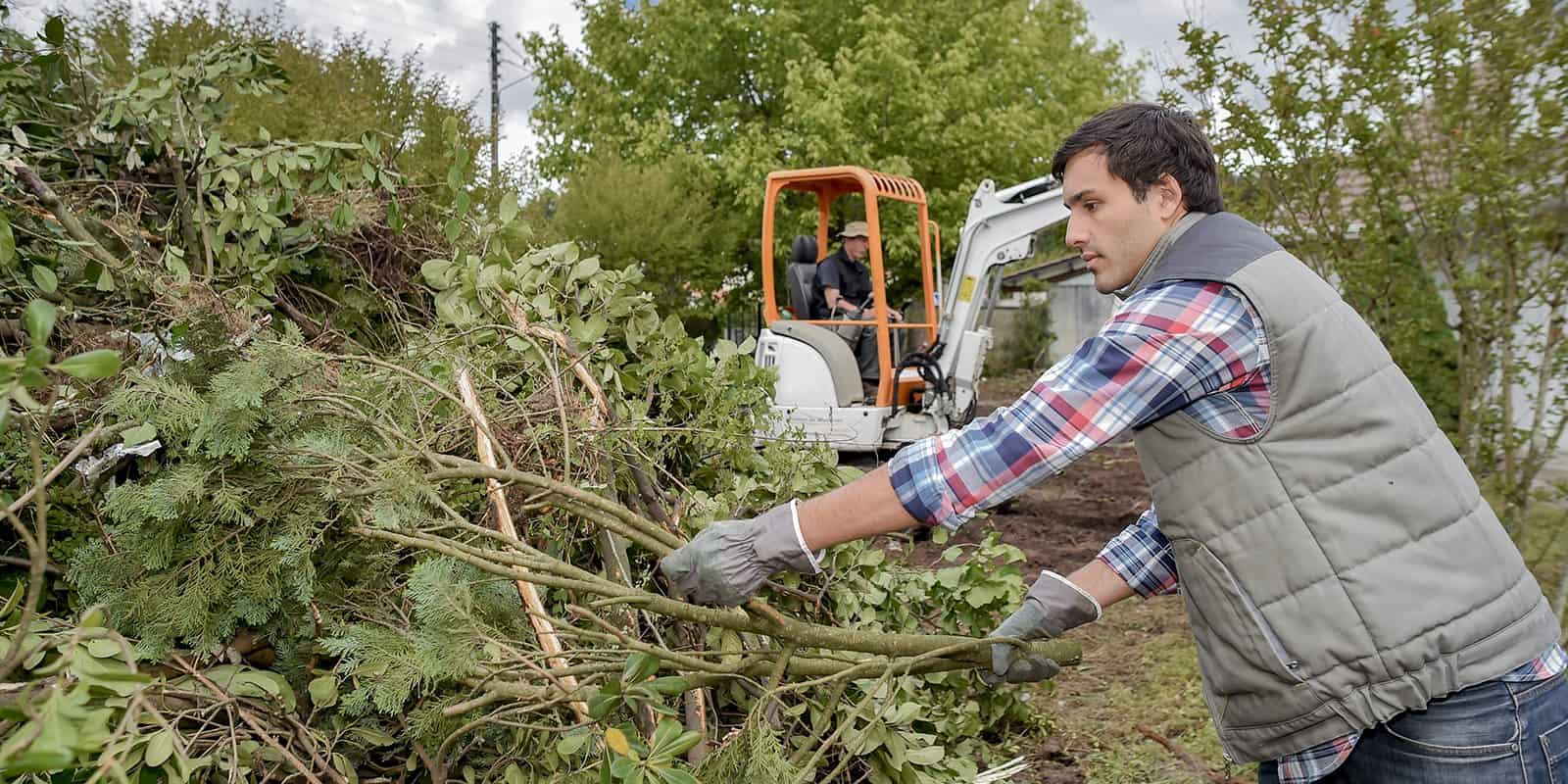
Debris removal is one of the most common omissions. The median tree removal job costs around $750 without hauling — and roughly $833 when debris removal is included. That $83 difference sounds modest, but it reflects a real cost that some companies simply don’t mention until the job is done and there’s a pile of wood and branches sitting in your yard. At that point, you’re either paying extra to have it removed or doing it yourself.
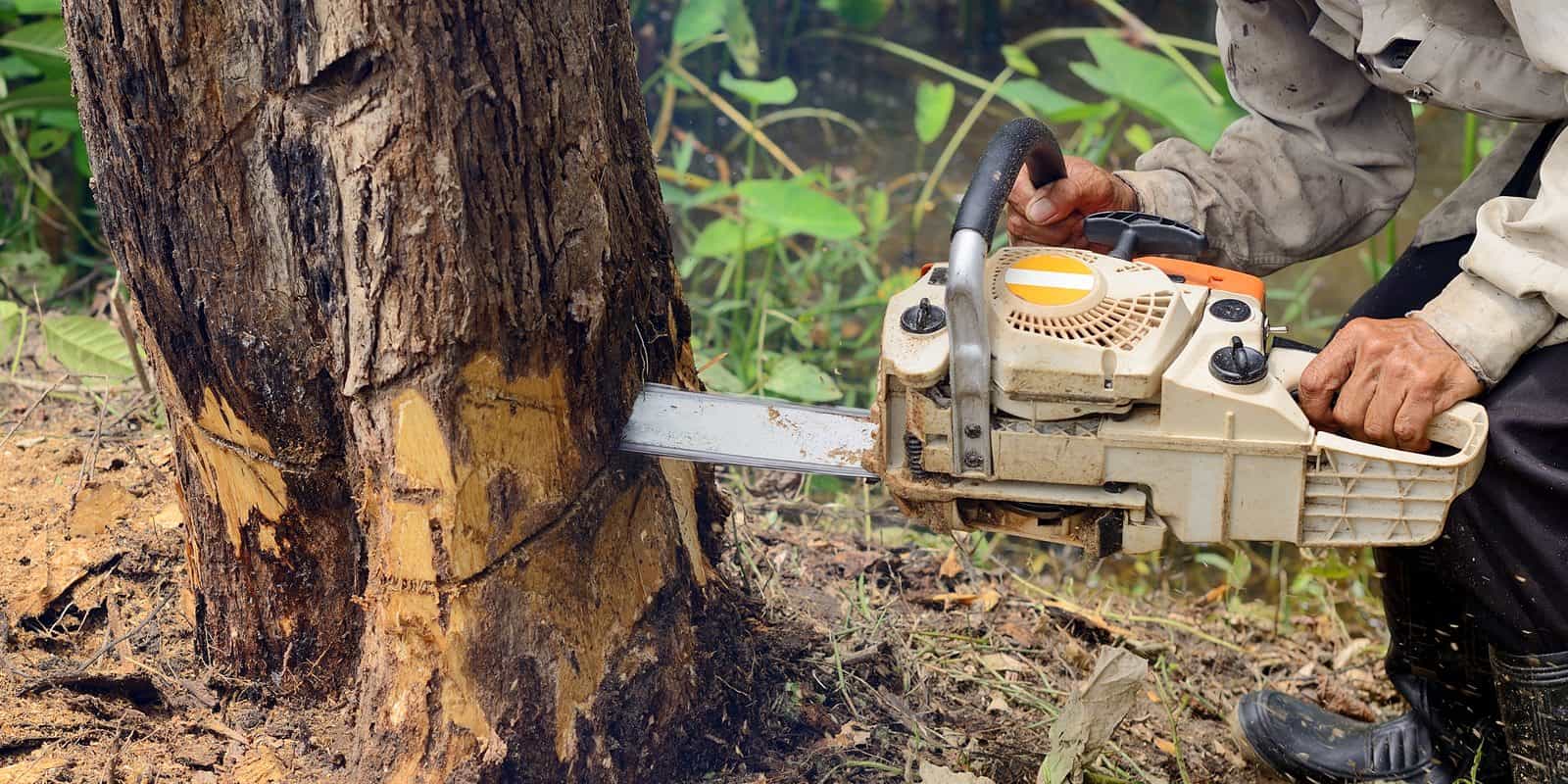
Stump grinding is another one. Most homeowners assume it’s part of the job. It usually isn’t, unless it’s explicitly stated. Stump removal adds anywhere from $100 to $500 depending on the diameter and depth — and a stump left behind means you can’t replant, can’t lay sod, and have an eyesore sitting in the lawn indefinitely.
Permit handling is the third piece that disappears from cheap quotes. In Nassau County, this isn’t optional in most cases — it’s a legal requirement. A company that doesn’t mention permits isn’t saving you money. They’re transferring the risk to you. If work is done without the required permit and your municipality finds out, the fine lands on the homeowner, not the contractor. That’s a $10,000 exposure that no low estimate is worth.
The math isn’t complicated. A $400 quote that excludes debris removal, stump grinding, and permit fees can easily run past $800 once everything is accounted for. A transparent $750 all-in estimate is frequently the better value — and the one that doesn’t come with a follow-up conversation about what wasn’t included.
When you’re comparing estimates in communities like Garden City, Freeport, or Massapequa, the question isn’t just “what’s the number?” It’s “what does that number actually cover?”
Why Nassau County Tree Removal Costs More Than the National Average
You’ll see national cost guides quoting $385–$1,070 as a typical range for tree removal. Nassau County regularly runs higher than that, and there are specific reasons why.
The density of Nassau County’s residential neighborhoods is a major factor. Homes here sit close together. Yards are relatively small. Trees are often surrounded by fences, pools, gardens, driveways, and neighboring structures. That means standard equipment sometimes can’t reach the tree safely, and specialized techniques — including rope work and controlled sectional removal — become necessary. That level of precision takes more time, more skill, and more equipment than a straightforward removal in an open lot.
The age of the housing stock matters too. Most Nassau County homes were built in the 1940s through 1960s, which means the trees on those properties are often 60 to 80 years old. Large, mature oaks and maples require a different approach than younger, smaller trees — more planning, more equipment, and more care to avoid damage to the property around them.
Coastal communities like Long Beach, Oceanside, and Rockville Centre have an additional layer of complexity. Salt air and strong onshore winds stress trees over time, making them more structurally unpredictable than inland trees of the same species and size. That unpredictability affects how removal is approached and priced. Superstorm Sandy left a lasting impression on Nassau County homeowners — a lot of people learned the hard way that a tree that looks fine from the outside can fail without warning. That experience is still driving removal decisions today, and it’s a legitimate reason to take hazard trees seriously.
None of this means you should expect to overpay. It means you should expect a complete estimate that accounts for the actual conditions of your property and your municipality — not a number pulled from a national average that has nothing to do with your specific backyard in Merrick or Wantagh.
What a Legitimate Tree Removal Estimate Should Always Include
A real estimate isn’t just a dollar amount. It’s a written commitment that tells you exactly what work will be done, what’s covered, and what the final bill will look like — before anyone picks up a chainsaw.
Every estimate we provide includes the full scope of work: cutting, complete debris removal, and cleanup. We assess the property on-site before quoting anything, because a phone number isn’t a real quote — it’s a guess. We handle permit requirements so you don’t have to navigate the Nassau County township rules yourself or risk a fine you didn’t see coming.
If a company can’t tell you exactly what’s included in writing, that’s worth paying attention to.
Proof of Insurance: The Question Every Nassau County Homeowner Should Ask First
Before any crew sets foot on your property, ask for a certificate of insurance. Not a verbal assurance — the actual document. This matters more than most homeowners realize.
Under New York law, if an uninsured worker is injured on your property, you as the homeowner can be held liable for medical costs and lost wages. It doesn’t matter that you hired a contractor. If they don’t carry workers’ compensation coverage, the exposure can fall on you. That’s not a hypothetical — it’s a documented risk that comes up regularly in the contractor space, and it’s one of the primary reasons unlicensed tree work is so dangerous for the homeowner, not just the worker.
General liability coverage is equally important. It protects your property if something goes wrong during the job — a branch comes down on the fence, a truck backs into the garden, a limb clips the neighbor’s shed. Accidents happen even with experienced crews. The question is whether you’re protected when they do.
We carry both general liability and workers’ compensation insurance, and we’ll show you the certificate before we start. That’s not an unusual request — it’s the professional standard. Any company that hesitates when you ask for it is telling you something important.
Nassau County’s post-storm environment makes this even more relevant. After a significant nor’easter or tropical storm, unlicensed operators move through residential neighborhoods quickly, often going door to door with low prices and urgent pitches. The BBB and multiple state attorneys general have documented this pattern. The best defense is simple: ask for the certificate of insurance before you agree to anything, and verify that the company has a verifiable local presence and track record.
How to Get a Tree Removal Estimate You Can Actually Trust
The most reliable estimate is one that comes from someone who has actually seen the tree. On-site assessments take the guesswork out of the equation — they account for the tree’s height, trunk diameter, lean, condition, proximity to structures, and access for equipment. All of those variables affect the price, and none of them can be accurately evaluated over the phone.
When we come out to assess a property, we look at everything: the tree itself, what’s around it, how we’ll access it, what protective measures are needed (we tarp ponds, work carefully around gardens, and position equipment to avoid lawn damage), and what the permit situation looks like for that specific Nassau County municipality. Then we give you a number that reflects all of it — not a ballpark that shifts once the job is underway.
Turnaround matters too. For homeowners in Oyster Bay, Valley Stream, or Port Washington dealing with a hazardous tree, waiting three weeks for a crew to show up isn’t an option. We typically schedule and complete jobs within one week, and most jobs — small to medium trees — are done in two to four hours. You don’t need to be home. Our crew is self-contained, works carefully, and leaves the property clean when they’re done. That last part isn’t a bonus feature — it’s just how the job is supposed to go.
Rich, who owns and runs Competition Tree, personally handles callbacks and estimates. If you leave a message, you’re going to hear from him directly — not a call center, not an answering service. That kind of responsiveness is harder to find than it should be, and it’s something our customers consistently mention when they refer us to neighbors across Nassau County.
Getting a Fair Tree Removal Estimate in Nassau County Starts Here
The bottom line is straightforward. A complete tree removal estimate covers the full job — cutting, cleanup, debris removal, and permit handling — with a written price that doesn’t change when the crew arrives. Anything less than that isn’t really an estimate. It’s a starting point for a larger bill.
Nassau County has real permit complexity, real property density challenges, and a real history of storm damage that makes tree removal a more involved process than it is in most markets. The right company understands all of that before they quote you anything.
If you have a tree that needs to come down in Nassau County — whether it’s a dead oak in Hempstead, storm damage in Long Beach, or an overgrown tree crowding your Massapequa backyard — we offer free on-site estimates with no obligation. Twenty-two years on Long Island, and the price we quote is the price you pay.
Article details:
- Published by:
- Competition Tree
- Published to:
- Last modified:
- July 15, 2026
Share:
Continue learning: