Average Tree Removal Cost on Long Island in 2026
Most national cost guides are wrong for Long Island. Here's what tree removal actually costs in Nassau County, and why the gap matters.
Share:
Summary:
You searched “average tree removal cost,” found a number somewhere between $750 and $850, and then got a quote for $1,400. Now you’re wondering if someone’s trying to take advantage of you.
They’re probably not. The national average just doesn’t apply here.
Nassau County has one of the highest tree removal costs in the country — and there are real, specific reasons for that. We walk you through what jobs actually cost on Long Island, what pushes prices up, and what to watch out for when you’re comparing estimates. No vague ranges, no filler. Just the information you need to make a confident decision.
Average Price for Tree Removal in Nassau County, NY
Tree removal in Nassau County averages around $1,400, with most jobs falling somewhere between $500 and $2,300. That’s roughly 65 to 85 percent higher than what you’ll see cited on national home improvement sites — and it’s not because Nassau County contractors are padding their margins.
The gap is structural. We work with mature trees on tight suburban lots, often near structures, fences, or overhead utility lines. Equipment needs are heavier, disposal costs are higher, and permit fees are baked into nearly every job. When you account for all of that, the national average stops being a useful benchmark entirely.
Why Long Island Tree Removal Costs More Than the National Average
A lot of Nassau County’s housing stock was built in the late 1940s and 1950s — Levittown, the first planned suburban community in America, went up between 1947 and 1951 right here in Nassau County. That means the trees on those properties are 60, 70, sometimes 80 years old. You’re not dealing with a 25-foot ornamental. You’re dealing with a mature oak or maple that’s pushing 70 feet, with a canopy spread that reaches your neighbor’s yard and roots that have been growing toward your foundation for decades.
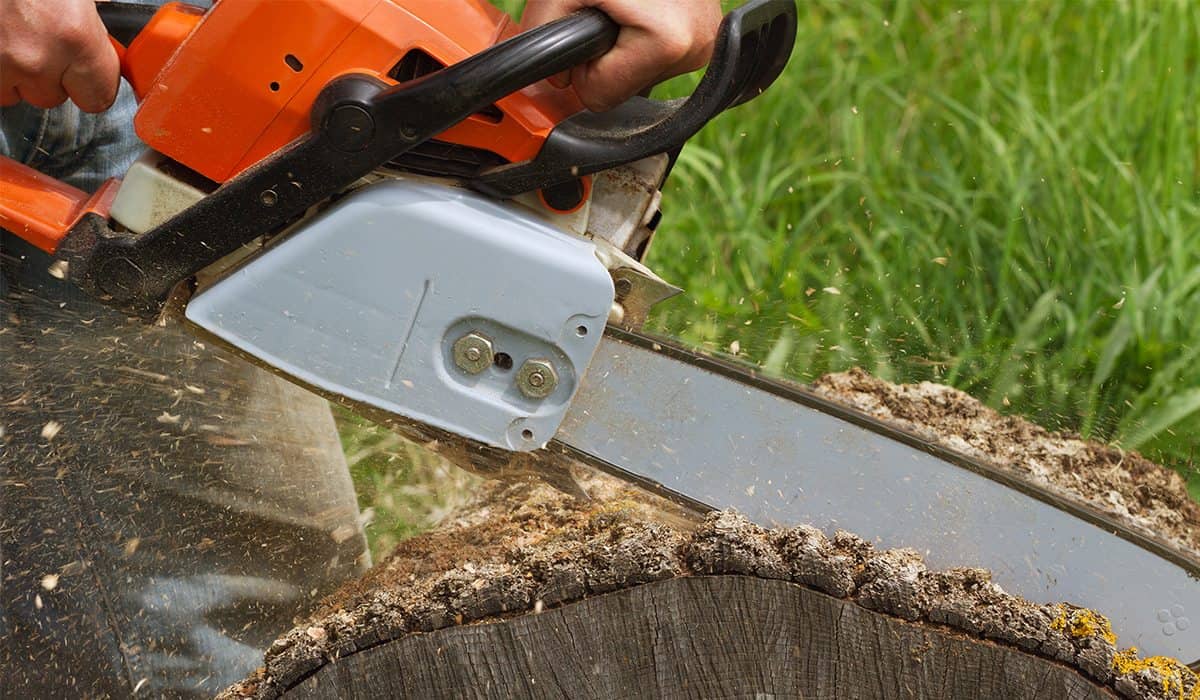
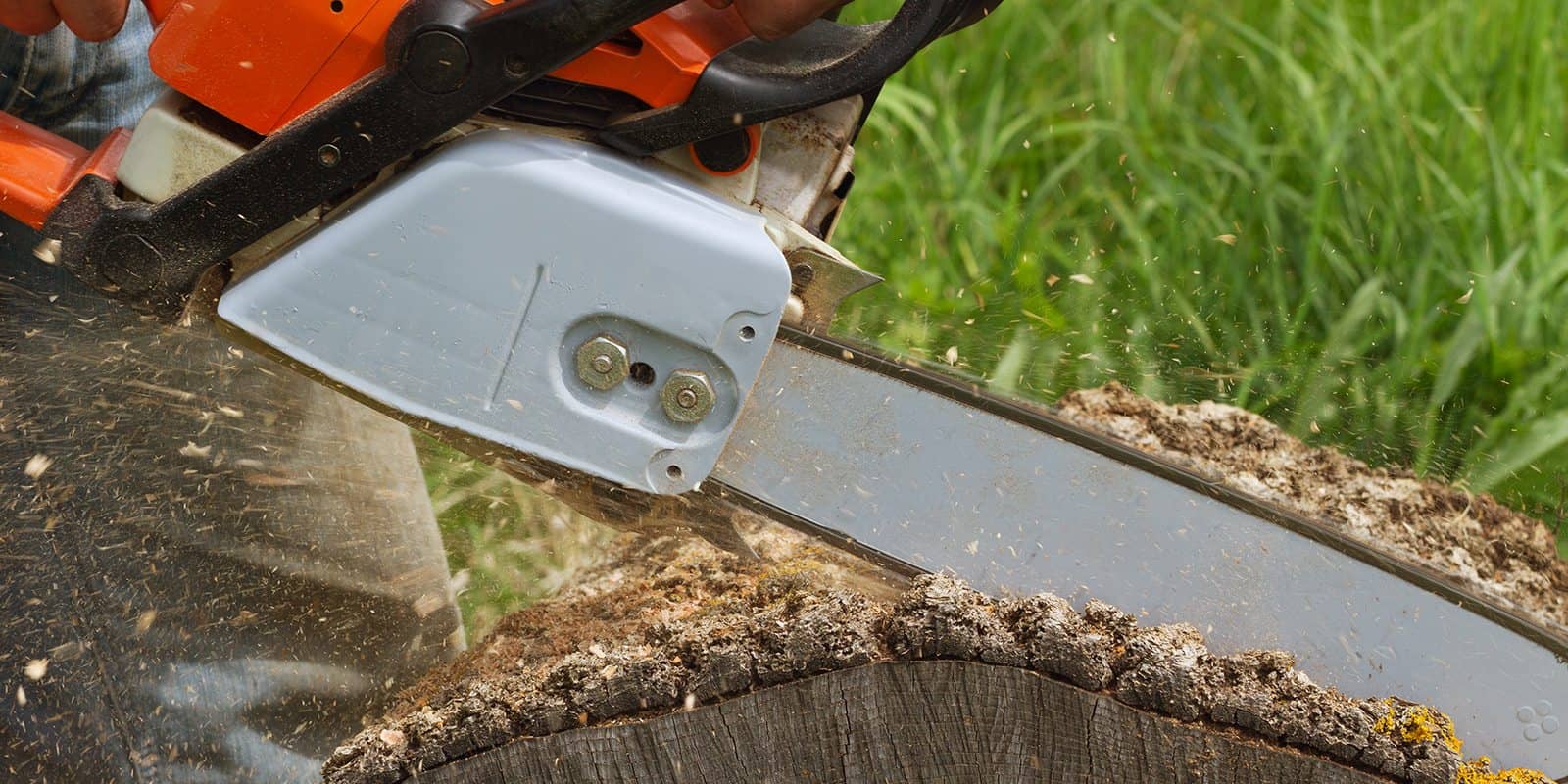
Removing a tree like that isn’t just a chainsaw job. It requires a bucket truck or crane, a crew that knows how to section it down safely without dropping a limb on your roof, and a plan for hauling out the debris. A 3-person crew in Nassau County runs $250 to $320 per hour. Add permit fees — which range from $50 to $200 depending on your municipality — and a stump grinding line item, and the final number starts making sense.
There’s also the density factor. Nassau County lots are smaller than Suffolk County lots. Trees are often positioned close to structures, driveways, and property lines. That proximity raises the complexity of every cut and limits where equipment can be staged. A removal that would take two hours on a half-acre Suffolk lot can take most of a day in a tightly packed Rockville Centre or Levittown yard.
And then there’s the coastal exposure. Communities along the south shore — Long Beach, Atlantic Beach, Island Park — deal with salt air that weakens tree structure over time, combined with sandy, unstable soil that reduces root stability. A tree that looks solid from the street can be significantly compromised at the base. That kind of unpredictability requires more careful rigging and more time on the job.
What Affects the Cost of Removing a Tree on Your Property
Tree size is the biggest single driver of cost. Small trees under 30 feet typically run $300 to $800. Large trees over 60 feet, especially those near a structure or power line, can reach $1,500 to $3,000 or more. The jump isn’t arbitrary — bigger trees require more equipment, more crew time, and more careful planning to bring down without damaging whatever’s nearby.
Beyond size, proximity to your house, fence, or PSEG Long Island utility lines changes the equation significantly. A tree growing into power lines isn’t just a tree removal — it’s a coordination job that involves additional safety protocols and, in some cases, requires PSEG to be notified or involved. That adds time, and time adds cost.
The condition of the tree matters too. A dead or diseased tree is often less predictable than a healthy one. The wood can be brittle, the structural integrity harder to assess, and the removal more likely to require additional precautions. Some crews charge more for dead tree removals for exactly this reason.
Stump grinding is almost always a separate line item. If a quote doesn’t mention the stump, ask directly — because leaving it in the ground is rarely what homeowners actually want, and finding out it’s an add-on after the fact is one of the most common frustrations we hear. Debris removal is something we include on every job, so branches, logs, and chips leave with us. But not every company operates that way, and it’s worth confirming before you sign anything.
Finally, permit fees are a real cost in Nassau County that often get overlooked during the comparison process. The Town of Hempstead, Town of North Hempstead, Town of Oyster Bay, and the City of Long Beach each have their own tree ordinances, thresholds, and timelines. Standard permit applications typically take 10 to 20 days to process. Failing to pull a required permit can result in fines up to $10,000 — and that’s documented in Nassau County municipal code. Some towns also require Payment-In-Lieu fees of $150 to $500 into a town tree fund when replanting space is limited.
Average Cost to Take Down a Tree: What the Quote Should Include
Getting a quote is easy. Understanding what’s in it is harder. The most common frustration homeowners share with us isn’t the price itself — it’s finding out after the fact that the number they agreed to didn’t cover everything they assumed it did.
A complete, honest estimate should spell out what’s included: the removal itself, debris hauling, whether stump grinding is part of the scope or a separate charge, and any permit fees that apply to your specific municipality. If you’re comparing three quotes and one is significantly lower than the others, the first question to ask is what it leaves out — not whether you’ve found a bargain.
Cheap Tree Removal on Long Island: What Low Bids Usually Mean
After major storms, Nassau County sees an influx of operators who aren’t local, aren’t insured, and aren’t planning to be around if something goes wrong. After Hurricane Sandy in 2012, there were documented cases on Long Island of homeowners being charged $15,000 for a single oak removal — with the stump left in the ground and the debris not hauled. That’s an extreme example, but the pattern shows up in smaller ways on ordinary jobs too.
A low bid usually means one of a few things: the stump isn’t included, the debris isn’t included, the crew isn’t insured, or the permit isn’t being pulled. Any one of those omissions can cost you more than the difference between the low bid and the fair one. If a worker without workers’ compensation coverage is injured on your property, your homeowner’s insurance — and potentially your personal liability — is on the line.
We’ve had homeowners tell us they got 12 or more quotes before calling us. We understand why. Tree removal is expensive, the price variation is confusing, and it’s hard to know who to trust. What we’d encourage you to ask every company is simple: Are you fully licensed and insured? What exactly does this quote include? Will you pull the permit if one is required? A company that answers those questions clearly and in writing is one worth considering. One that hedges or deflects is worth crossing off the list.
The goal isn’t to spend the least. It’s to spend the right amount with someone who will do the job completely and leave your property the way they found it — minus the tree.
Low Cost Tree Removal: How to Legitimately Reduce What You Pay
There are real ways to reduce the cost of tree removal on Long Island that don’t involve hiring someone who cuts corners. The first is timing. Late fall and winter are slower seasons for tree work, and we’re more flexible on pricing when the schedule allows. If your tree isn’t an emergency situation, booking during the off-season can make a meaningful difference.
If you have more than one tree that needs attention, bundling them into a single job almost always costs less per tree than scheduling them separately. The crew is already on-site, the equipment is already there, and the efficiency savings get passed along.
One option that often gets overlooked: we provide free wood and wood chips with every job. If you have a fireplace, a fire pit, or garden beds that could use mulch, you’re getting something back from the removal rather than just writing a check. It’s a tangible benefit that most companies don’t offer.
Leaving the wood on your property — if you have space and a use for it — is another way some homeowners reduce the net cost of a job. Hauling and disposal is a real expense for tree crews, and if that step is eliminated, it can be reflected in the estimate.
What we’d caution against is treating price as the only variable. In a market like Nassau County, where permit requirements vary by town, lots are dense, and trees are mature, the cheapest option is often the most expensive one by the time everything is settled. A complete job done right the first time, by a crew that’s been working on Long Island for over 22 years, is a better value than a low bid that leaves you with a stump, a pile of debris, and an unpermitted removal on your property record.
Getting a Fair Tree Removal Estimate in Nassau County
The national average for tree removal doesn’t tell you much about what your job will cost in Massapequa, Syosset, Garden City, or anywhere else in Nassau County. The local average of $1,400 — with a range of $500 to $2,300 depending on size, location, and complexity — is a more honest starting point. From there, the details of your specific tree and property are what determine the real number.
What matters most is getting a complete estimate from a company that will tell you exactly what’s included, pull the permits that are required, and stand behind the work when it’s done. If you’re ready to get a real number for your property, Competition Tree, Inc. offers free on-site estimates with no obligation — and we’ve been doing this work on Long Island for over 22 years.
Article details:
- Published by:
- Competition Tree
- Published to:
- Last modified:
- July 22, 2026
Share:
Continue learning: