Tree Removal Yourself: The Real Costs Most Homeowners Miss
Before you rent a chainsaw, find out what DIY tree removal actually costs on Long Island — and what most homeowners never see coming.
Share:
Summary:
You got a quote. It felt high. So now you’re wondering whether you could just handle it yourself — rent a chainsaw, take a weekend, save some money. That’s a completely reasonable thing to wonder, and you’re not the first Nassau County homeowner to go down that road.
The problem isn’t that DIY tree removal is impossible. For the right tree, in the right situation, it can be done. The problem is that the actual cost of doing it yourself is almost always higher than people expect — and the risks are more specific to Long Island than most online guides let on. Here’s what the full picture actually looks like.
What Tree Removal Actually Involves
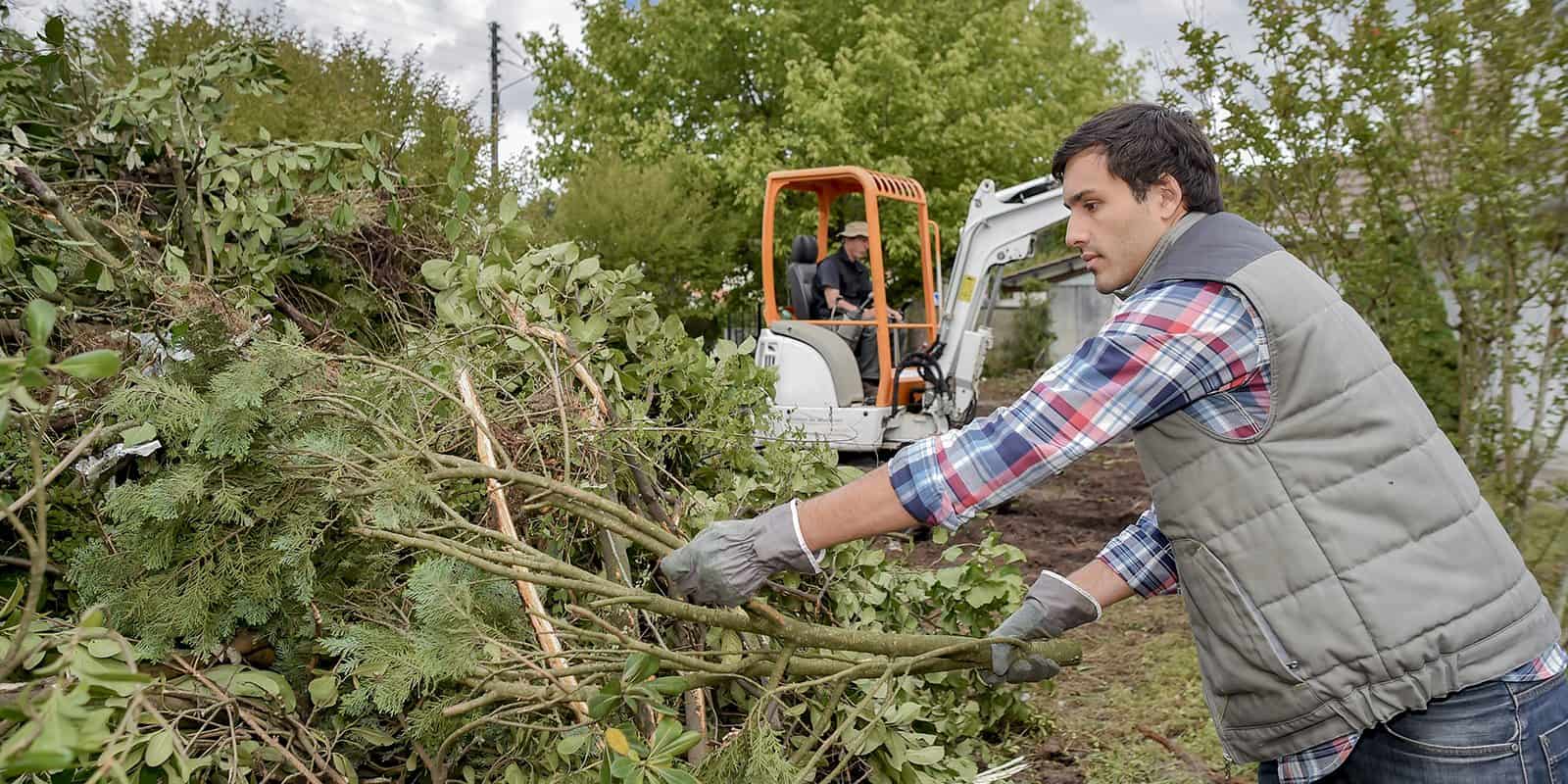
Tree removal isn’t one task — it’s a sequence of them. You assess the tree, plan the fall direction, clear the area, make your cuts, manage the fall, cut the trunk and branches into sections, grind or remove the stump, and then deal with everything that’s left. Each of those steps requires different tools, different judgment, and a different kind of physical effort.
On a rural property with open space in every direction, some of those steps are forgiving. On a typical Nassau County lot — where your neighbor’s fence is fifteen feet away, your above-ground pool is behind you, and there’s a utility line running along the property line — almost none of them are. The margin for error shrinks dramatically when you’re working in a tight suburban space, and that changes the math on what DIY actually means here.
Tree Removal Equipment: What You Actually Need to Rent or Buy
This is where most homeowners underestimate the project. The mental image is usually a chainsaw and a free Saturday. The reality is a longer list than that.
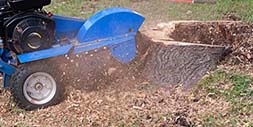
A chainsaw rental runs $60–$120 per day depending on size and where you rent it. That’s the starting point, not the total. You’ll also need a stump grinder — and these are large, heavy machines that typically cost $85–$400 per day to rent, plus a trailer to haul it if the rental yard doesn’t deliver, which adds another $50–$60. If the rental company requires a security deposit, which most do, that’s another $150–$300 held against your card.
Then there’s safety gear. Chainsaw work requires a helmet with a face shield, chainsaw chaps, gloves, and steel-toed boots. If you don’t already own these, buying them new runs $150–$300. That’s not optional — it’s the minimum responsible setup for operating a chainsaw.
Debris disposal is the cost that surprises people most. Once the tree is down, you have a significant volume of wood, branches, and brush that needs to go somewhere. On Long Island, that means either renting a wood chipper (another daily rental cost), making multiple trips to an approved disposal site, or paying a hauling fee. Debris removal in Nassau County typically adds $100–$500 or more depending on the size of the tree and how much material there is.
Add it up honestly — chainsaw rental, stump grinder rental, trailer, safety gear, disposal fees, fuel, and deposits — and you’re looking at somewhere between $595 and $1,680 before you’ve made a single cut. That range assumes everything goes smoothly, no equipment gets damaged, and you don’t need to make a second trip to the rental yard because something didn’t work the first time.
For context, professional tree removal in Nassau County averages around $1,400, with a typical range of $500–$2,300 depending on the size and location of the tree. Small trees under 20 feet often run $300–$800. Larger trees near structures or power lines run $1,500–$3,000 or more. When you stack those numbers against an honest DIY estimate, the gap is a lot smaller than the original quote made it seem.
How to Cut Down a Tree Safely — and Where It Goes Wrong
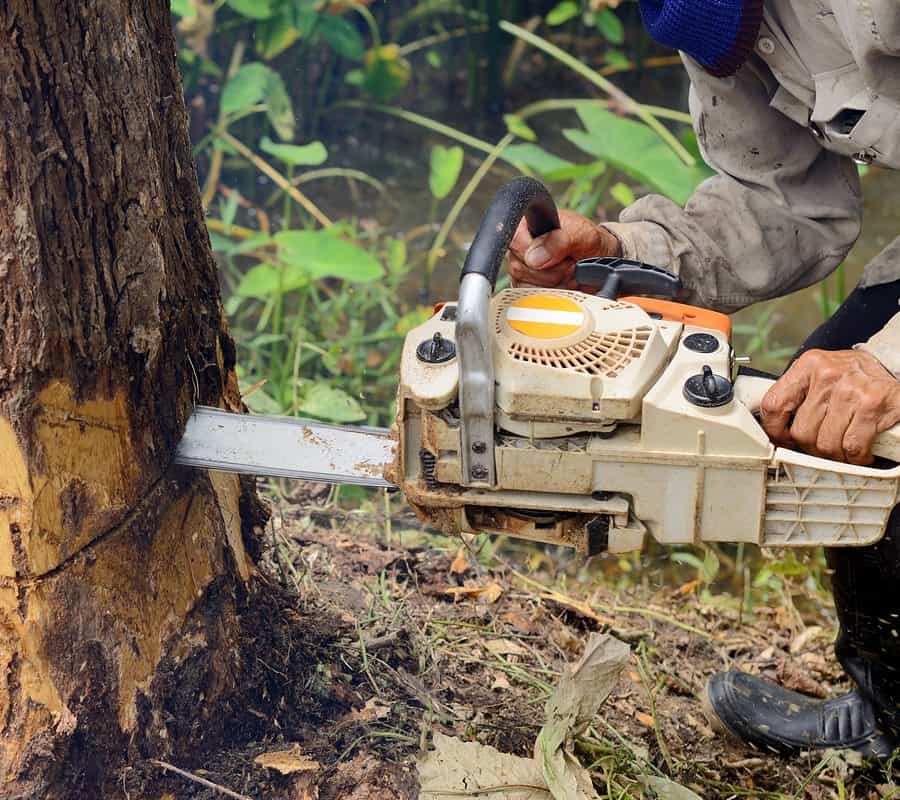
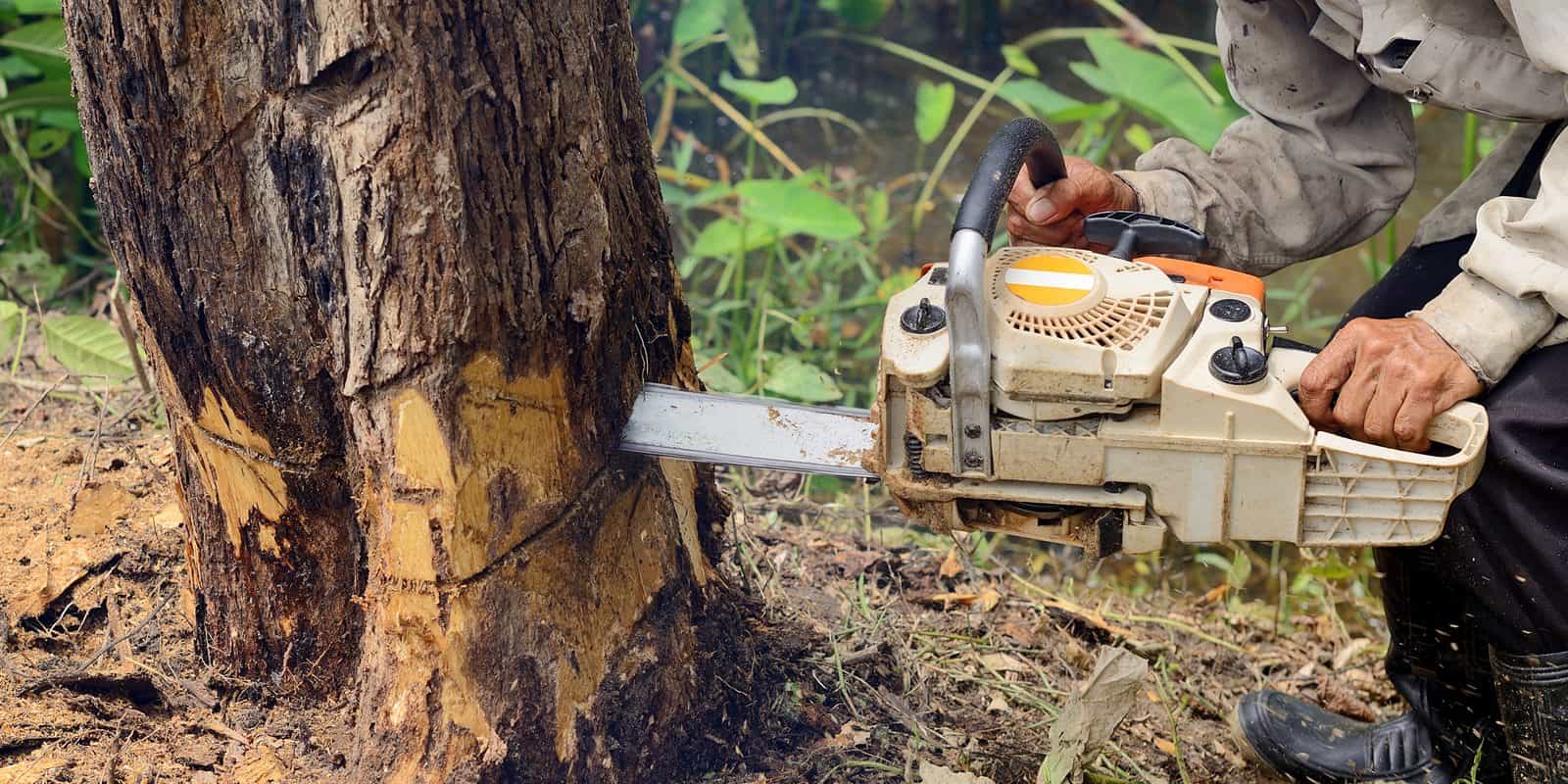
The actual felling process has a specific sequence that experienced cutters follow for a reason. You start with a directional notch cut on the side facing where you want the tree to fall. Then you make a back cut from the opposite side, leaving a section of uncut wood — called the hinge — that controls the direction of the fall. Done correctly, this gives you meaningful control over where the tree lands. Done incorrectly, it doesn’t.
The most dangerous mistake in DIY felling is a phenomenon called a barber chair. It happens when the back cut is made incorrectly and the trunk splits vertically toward the operator instead of falling away. It’s fast, it’s unpredictable, and it’s one of the leading causes of serious injury in tree work. Around 100 people in the U.S. die from this type of accident every year.
There’s also the weight factor, which most people genuinely underestimate. A mature maple that’s 80 feet tall and two feet wide can weigh more than 4,000 pounds. That’s two tons of wood moving through the air. Even a small miscalculation in the notch angle or hinge width can redirect that weight somewhere you didn’t intend.
Storm-damaged trees are the most dangerous scenario of all, and they’re also the moment when DIY temptation is highest. After a nor’easter or tropical storm rolls through Nassau County, homeowners wake up to trees leaning on roofs, resting on fences, and pressing against power lines. The urgency is real. But a storm-damaged tree has already had its structural integrity compromised — it can split, shift, or fall in ways that a healthy tree wouldn’t. That’s exactly when amateur removal is most likely to go wrong.
We’ve responded to emergency calls across Nassau County after major storms, and what we see consistently is that the trees people tried to handle themselves before calling us were the ones that created secondary damage — to the house, to neighboring property, or to the person doing the cutting.
Tree Removal Permits in Nassau County: What You Need to Know
Here’s something that catches a lot of Nassau County homeowners completely off guard: you may need a permit to remove a tree on your own property, and the rules are not the same across the county.
Nassau County doesn’t have a single county-wide tree removal ordinance. Each township and village sets its own rules. Hempstead, North Hempstead, Freeport, Port Washington, and Oyster Bay all have different requirements. Most require permits for trees above a certain diameter — typically anywhere from 6 to 12 inches, depending on where you live. Standard permit applications take 10 to 20 days to process. Fees typically run $50–$200.
If you remove a tree without the required permit, you’re not looking at a warning. You’re looking at fines that can reach $10,000. That number changes the calculation on DIY pretty quickly.
Do I Need a Permit to Remove a Tree in Nassau County?
The honest answer is: it depends on where in Nassau County you live, and you need to check before you do anything.
Because the rules vary by municipality, there’s no single answer that covers every homeowner. A resident in Rockville Centre lives under different rules than someone in Massapequa or Great Neck. The tree’s diameter, its location on the property, and whether it’s considered a protected species can all affect whether a permit is required.
What makes this particularly risky for DIY is the assumption that it’s your tree, so it’s your call. That’s not how it works in Nassau County. Municipalities here treat significant trees as a community resource with regulated removal — and the enforcement is real. We’ve seen homeowners face serious fines for removals they genuinely didn’t know required permits.
If you’re unsure whether a permit applies to your situation, the safest move is to contact your local municipality directly before starting any work. If you work with us at Competition Tree, Inc., we already know what’s required in your area and can advise you before anything gets cut.
What Happens When DIY Tree Removal Goes Wrong
Most DIY tree removal guides are written for a general audience — someone with a half-acre lot in a low-density suburb where a tree can fall in almost any direction without hitting anything important. That’s not Nassau County.
The average residential lot here is tight. Houses are close together. Fences, pools, sheds, and utility lines are often within the fall zone of any significant tree. When something goes wrong — and in tree work, the margin between “fine” and “serious problem” is narrow — the consequences in a dense suburban environment are proportionally larger.
Property damage is the most common outcome of a DIY removal that goes sideways. A tree that falls in the wrong direction can damage your home, your neighbor’s home, a shared fence, or a vehicle. The cost of that damage can dwarf whatever you saved by not hiring a professional. And depending on your homeowner’s insurance policy, a DIY removal that wasn’t permitted or that caused damage to a neighbor’s property may create coverage complications you didn’t anticipate.
Injury is the other outcome people don’t plan for. Around 70 people per day are treated in U.S. emergency rooms for chainsaw-related injuries. That’s not a rare event — it’s a daily occurrence, and the majority of those injuries happen to people who aren’t professional cutters. Working alone, which most DIY homeowners do, compounds the risk significantly. Studies on tree felling fatalities have found that 67% of nonprofessional deaths involved a solo worker.
The decision to remove a tree yourself is one that deserves the full picture — not just the rental shelf price, but the actual exposure you’re taking on. For a small, young tree in an open area well away from any structure, DIY may genuinely be reasonable. For a mature oak in a Levittown backyard with a pool on one side and a neighbor’s garage on the other, the professional quote starts to look like the cheaper option.
When to Call a Professional Tree Service in Nassau County
If the tree is large, close to a structure, near a power line, or storm-damaged — call a professional. That’s not a sales pitch, it’s the honest answer based on what the risks actually are and what DIY actually costs once you account for everything.
For Nassau County homeowners specifically, the permit layer adds another reason to work with someone who knows the local rules. The last thing you want is a $10,000 fine on top of a weekend of hard work.
We’ve been doing this work on Long Island for over 23 years. We offer free estimates — typically within one day of your call — seven days a week. If you’ve got a tree you’re not sure about, Competition Tree, Inc. is a straightforward call to make before you commit to anything.
Article details:
- Published by:
- Competition Tree
- Published to:
- Last modified:
- September 23, 2026
Share:
Continue learning: