Why Arborist Insurance Protects Your Property
Before you hire anyone to touch your trees, there's one question that could save you thousands. Here's what Nassau County homeowners need to know.
Share:
Summary:
You’ve got a tree that’s been bothering you — maybe it’s leaning a little more than it used to, maybe a branch came down in the last storm, or maybe you just can’t shake the feeling that something’s off. So you start asking around, and before long you’ve got a couple of quotes. One’s from a company you found online. One’s from a guy who knocked on your door after the last nor’easter. The prices are very different. If removing the tree is the best solution, ask whether stump grinding and removal is included so you know exactly what’s covered.
Here’s what that price difference usually comes down to — and why it matters a lot more than most homeowners in Nassau County realize.
What a Licensed Arborist Actually Does — and Why It's Not the Same as a Tree Service
A general tree service shows up, does the work, and leaves. A licensed arborist shows up, looks at the whole picture, and tells you what the work should actually be — and whether it needs to happen at all. That distinction matters when you’re dealing with a tree that’s been on your property for 60 years and you genuinely don’t know if it’s a hazard or just a little stressed.
ISA Certified Arborists — credentialed through the International Society of Arboriculture — are trained to assess tree health, identify disease, evaluate structural risk, and give you a recommendation grounded in real diagnostic knowledge. They’re required to maintain continuing education to keep that credential active. It’s not a license you earn once and forget about.
How Does an Arborist Consultation Work From Start to Finish?
A proper arborist consultation isn’t a quick walk around the yard. It starts at the ground — literally. We begin with the root collar and soil, looking for signs of fungal growth, discoloration, or anything that suggests structural compromise below the surface. From there, we work up the trunk, checking for loose bark, hollow areas, cracks, and internal decay that wouldn’t be obvious from twenty feet away.
Then comes the canopy — how the major limbs attach to the trunk, whether there are co-dominant stems that could split under load, and whether the branch tips show signs of die-back, pest damage, or disease. By the time the assessment is done, you have an actual picture of what’s going on with that tree, not just a gut feeling.
What you get at the end of that visit matters too. A thorough consultation produces written documentation — something you can share with your insurance carrier, your HOA, or your municipality if a permit is required. In Nassau County, where dozens of incorporated villages each have their own tree ordinances, having a written arborist report can be the difference between a smooth removal permit and a bureaucratic headache. Garden City, Oyster Bay, Manhasset, Rockville Centre — they all have their own rules, and we know how to navigate them.
This is also where the “just a tree guy” comparison breaks down. Someone with a truck and a chainsaw can remove a tree. They can’t produce a documented risk assessment that holds up with your HOA board or your homeowner’s insurance company. That’s a different skill set, and it requires different credentials.
We offer free on-site consultations throughout Nassau County — no obligation, no fee, just a clear-eyed look at what you’re dealing with and an honest recommendation. Most estimates are turned around within 24 hours, and most jobs are completed within a week of scheduling.
What Are the Red Flags That Tell You an Arborist Isn't Qualified?
The tree service industry has a low barrier to entry. Someone can buy a chainsaw, put a magnetic sign on a truck, and start knocking on doors in Levittown or Massapequa the morning after a storm. That doesn’t mean they know what they’re doing — or that your property is protected if something goes wrong.
A few things that should give you pause: any company that recommends topping as a standard service is not following ANSI A300 industry standards. Topping — cutting a tree’s main leader back to a stub — is explicitly identified as an unacceptable pruning practice by the American National Standards Institute. It creates large open wounds that invite decay and produces weakly attached new growth that’s more likely to fail over time, not less. If someone quotes you a topping job as a solution to a large tree, that’s a signal.
Pressure tactics are another one. A legitimate company gives you a written estimate and lets you think about it. If someone’s pushing you to sign before they leave the driveway, that’s worth noticing.
And then there’s the insurance question — which is really the whole point of this page. If a contractor hesitates when you ask for proof of insurance, or offers you a verbal assurance instead of a Certificate of Insurance sent directly from their carrier, that hesitation is telling you something. We’ll come back to this in more detail, but the short version is: the consequences of hiring an uninsured tree service fall on you, not them.
We’ve been doing this work on Long Island since 1998. In that time, we’ve seen what happens when homeowners hire based on price alone. It rarely ends the way they hoped.
Arborist Insurance and What It Means for Nassau County Homeowners
When a tree service says they’re insured, most homeowners take that at face value. But there are two different types of coverage that matter here, and most people don’t know to ask about both.
General liability insurance covers property damage — if a branch lands on your fence, your car, or your neighbor’s garage, that’s what pays for it. Workers’ compensation insurance is different. It covers the workers themselves if they’re injured on the job. And in the tree service industry, where the fatality rate is among the highest of any trade, that distinction is not academic.
What Happens If a Tree Worker Gets Hurt on Your Property Without Workers' Comp?
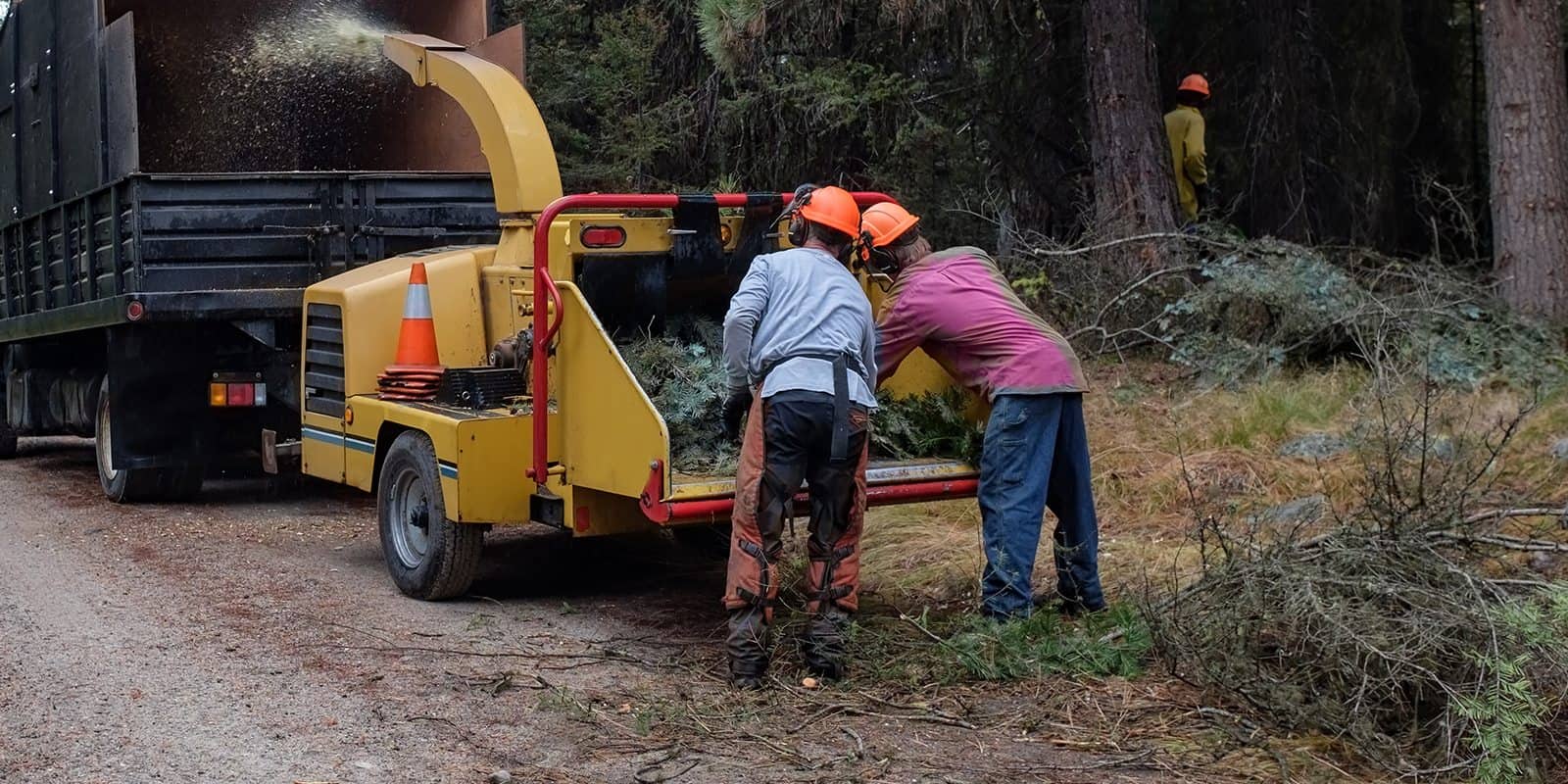
This is the part most homeowners don’t know — and the part that matters most. If a tree service worker is injured on your property and the contractor doesn’t carry workers’ compensation insurance, you can be held financially responsible for that worker’s medical bills and lost wages. Not the contractor. You. And that liability can sit with you while the case is being litigated, which can take a long time.
Tree work is genuinely dangerous. Climbing 40 or 50 feet into a structurally compromised tree over a pool or a power line is not a low-risk activity. The industry’s fatality rate reflects that. When a legitimate contractor carries workers’ comp, they’re absorbing that risk themselves. When they don’t carry it, that risk transfers to you the moment their crew sets foot on your property.
There’s another piece of this that almost never gets explained: standard landscaper insurance typically only covers work performed at or near ground level — up to about 8 to 10 feet above the ground. The moment a worker climbs higher than that, a landscaper’s policy won’t cover an injury. So a company that’s insured as a landscaping business, but is doing actual tree climbing work, is leaving a significant gap — and again, that gap lands on the homeowner.
The right move before any tree work begins is to ask for a Certificate of Insurance — not a verbal assurance, not a photocopy, but a COI sent directly from the insurance company. It takes the contractor about five minutes to request. If they push back on that, you have your answer.
Our insurance covers both general liability and workers’ compensation. We can provide proof of insurance before we start any work — and we’ll do it without being asked, because we think it’s the right way to operate.
How Much Does an Arborist Consultation Cost in Nassau County?
Arborist consultation costs vary depending on what’s involved — the size and condition of the tree, how many trees are being assessed, whether a written report is needed for a permit or an HOA, and what treatment or removal recommendations come out of the visit.
We offer free on-site consultations throughout Nassau County as the entry point for any job. You’re not paying for an expert to come look at your trees and tell you what they see — that’s part of how we do business. If the recommendation is removal, trimming, treatment, or simply monitoring, you’ll know what you’re looking at before any money changes hands.
What affects arborist cost more broadly is the scope of the work that follows the consultation. A large tree removal in a tight Nassau County backyard — say, a 70-year-old oak overhanging a pool in Syosset or a storm-damaged maple in a Hewlett side yard — involves more complexity than a straightforward removal in an open area. Tight access, proximity to structures, coordination with PSEG Long Island for trees near power lines — these factors affect both the method and the time involved.
Arborist pricing also reflects what’s included. We include complete debris removal on every job — branches, chips, logs, all of it. You won’t be left with a pile of wood at the edge of your driveway or a yard full of sawdust. That’s not an add-on; it’s just how we work. One of our customers in Nassau County put it plainly: they couldn’t tell the crew had been there. That’s the standard we hold ourselves to.
The trees on Nassau County’s established lots — many of them planted when the neighborhoods were built in the 1950s and ’60s — are now large, aging, and increasingly subject to the kinds of structural issues and pest pressures that benefit from a trained eye. Emerald ash borer, hemlock woolly adelgid, and oak wilt are all documented threats on Long Island. Catching those problems early, through a proper consultation, is almost always less expensive than addressing them after a tree has become a genuine hazard.
Finding the Right Arborist Consultation Service in Nassau County, NY
The short version of everything on this page: the difference between a licensed arborist and a general tree service is real, the insurance question is more important than most homeowners realize, and the cost of getting it wrong can far exceed whatever you saved on a low-ball quote.
If you have a tree that’s been on your mind — whether it’s a visible hazard, a disease you can’t identify, or just something that doesn’t look right — a professional consultation is the right first step. Not a guess, not a neighbor’s opinion, not a door-knocker’s estimate.
Competition Tree, Inc. has been serving Nassau County and the rest of Long Island since 1998. Rich answers the phone personally, estimates are free and typically scheduled within 24 hours, and every job we do is fully covered — liability and workers’ comp both. If you want to know what’s actually going on with your trees before you make any decisions, give us a call.
Article details:
- Published by:
- Competition Tree
- Published to:
- Last modified:
- July 15, 2026
Share:
Continue learning: