Land Clearing Cost on Long Island: What You’ll Actually Pay in Nassau County
Land clearing on Long Island costs more than national averages suggest. Here's what's actually driving the price — and what to watch for before you hire anyone.
Share:

Summary:
You’ve probably already found a few cost guides online. They quote something like $1,200 to $3,900 per acre, and then you call a local company and hear a number that’s twice that. It’s frustrating — and it makes you wonder whether someone is trying to take advantage of you.
They’re probably not. Long Island land clearing just costs more than the national average, for reasons that are entirely predictable once you understand what’s actually involved. This guide walks you through the real numbers, what’s behind them, and how to make sense of the quotes you’re getting — so you can make a confident decision without second-guessing every bid.
Land Clearing Cost on Long Island vs. the National Average
National cost guides put the average land clearing price somewhere between $1,200 and $8,000 per acre, with most homeowners spending around $2,581. Those numbers aren’t wrong — they’re just not Nassau County numbers.
On Long Island, land clearing typically runs $2,800 to $4,500 per acre. That gap exists for real reasons: higher labor costs driven by proximity to New York City, older suburban lots with mature trees that require more equipment and skill to remove safely, and a regulatory environment that adds steps — and sometimes costs — that don’t exist in most other markets.
If you’ve been budgeting based on what you read on a national home improvement site, this is the adjustment to make before you get too far into the planning process.
Why Nassau County Land Clearing Quotes Vary So Much
Two contractors can look at the exact same lot in Rockville Centre or Massapequa and come back with quotes that are thousands of dollars apart. That’s not necessarily a sign that one of them is dishonest. It usually means they’re pricing different scopes of work.
Land clearing isn’t a single service — it’s a bundle of several distinct tasks, and different contractors include different things. One quote might cover felling and chipping only. Another might include stump grinding, debris hauling, and soil stabilization after the fact. When you’re comparing bids, you’re often not comparing apples to apples, and the cheaper quote can end up costing more once you add the line items the other company already built in.
The main cost drivers to look for in any Nassau County clearing quote are vegetation density and type, the number and size of stumps, debris disposal (hauling vs. chipping in place), site accessibility for equipment, and whether permit fees are included or billed separately. Each of those factors can meaningfully shift the final number.
Mature trees — the kind that dominate older Nassau County neighborhoods like Levittown, Hicksville, Garden City, and Oyster Bay — cost more to remove than young growth or brush. A lot that’s been neglected for years and is full of established root systems takes longer and requires heavier equipment than a lot with light overgrowth. The terrain matters too. Flat, open ground is straightforward. Sloped or rocky ground, or a lot that’s tight against a neighbor’s fence or a structure, requires more precision and more time.
When we clear a lot, the chipped debris doesn’t have to become a disposal cost. We offer free wood chips to homeowners who want them — which eliminates one of the line items that often inflates a competitor’s quote.
Do You Need a Permit to Clear Land in Nassau County?
This is the question most homeowners either don’t think to ask or can’t get a straight answer on — and it matters more in Nassau County than almost anywhere else.
Nassau County doesn’t operate under a single, county-wide tree ordinance. The rules are set at the municipal level, which means the Town of Hempstead, the Town of North Hempstead, and the Town of Oyster Bay each have their own requirements. Then you layer in the City of Long Beach, the City of Glen Cove, and dozens of incorporated villages — many of which have their own additional rules. What’s required two streets over may be completely different from what applies to your property.
In practical terms, this means you can’t assume you’re in the clear just because a neighbor cleared their lot without a permit last year. The fines for unpermitted tree removal in Nassau County can reach $10,000 per tree. That’s the actual maximum penalty written into local code, not a worst-case hypothetical.
If your project involves removing three or more mature trees — which most lot clearing jobs do — you’ll likely need a tree permit, and possibly a building permit if the clearing is connected to a construction project. Properties within 100 feet of wetlands face additional review requirements. Nassau County may also require a stormwater management permit to ensure that clearing doesn’t increase runoff onto neighboring properties or into local waterways.
Working with a company that knows Nassau County specifically makes a real difference. We’ve been doing this work across Nassau and Suffolk Counties for over 22 years, and navigating the local permit landscape is part of what we do — not an afterthought.
Land Clearing Cost Per Acre: How the Pricing Actually Works
Land clearing is priced differently than single-tree removal. Instead of a per-tree rate, most contractors price clearing jobs by the acre or by square footage — and the per-acre rate varies significantly based on what’s on the land.
Lightly vegetated land with thin brush and small trees can run as low as $200 to $500 per acre nationally, though those numbers climb considerably on Long Island. Heavily wooded lots with mature trees — the kind common across Nassau County’s older residential communities — typically fall in the $3,395 to $6,155 per acre range nationally, and at the higher end of the Long Island scale. For construction prep, per-square-foot pricing often runs $1.18 to $2.00 per square foot.
Most Nassau County residential lots are sub-acre, so many clearing jobs are priced by the job rather than a strict per-acre calculation. The size of the lot, the density of vegetation, and what’s included in the scope all factor into a final number.
What's Actually Included in Lot Clearing Services
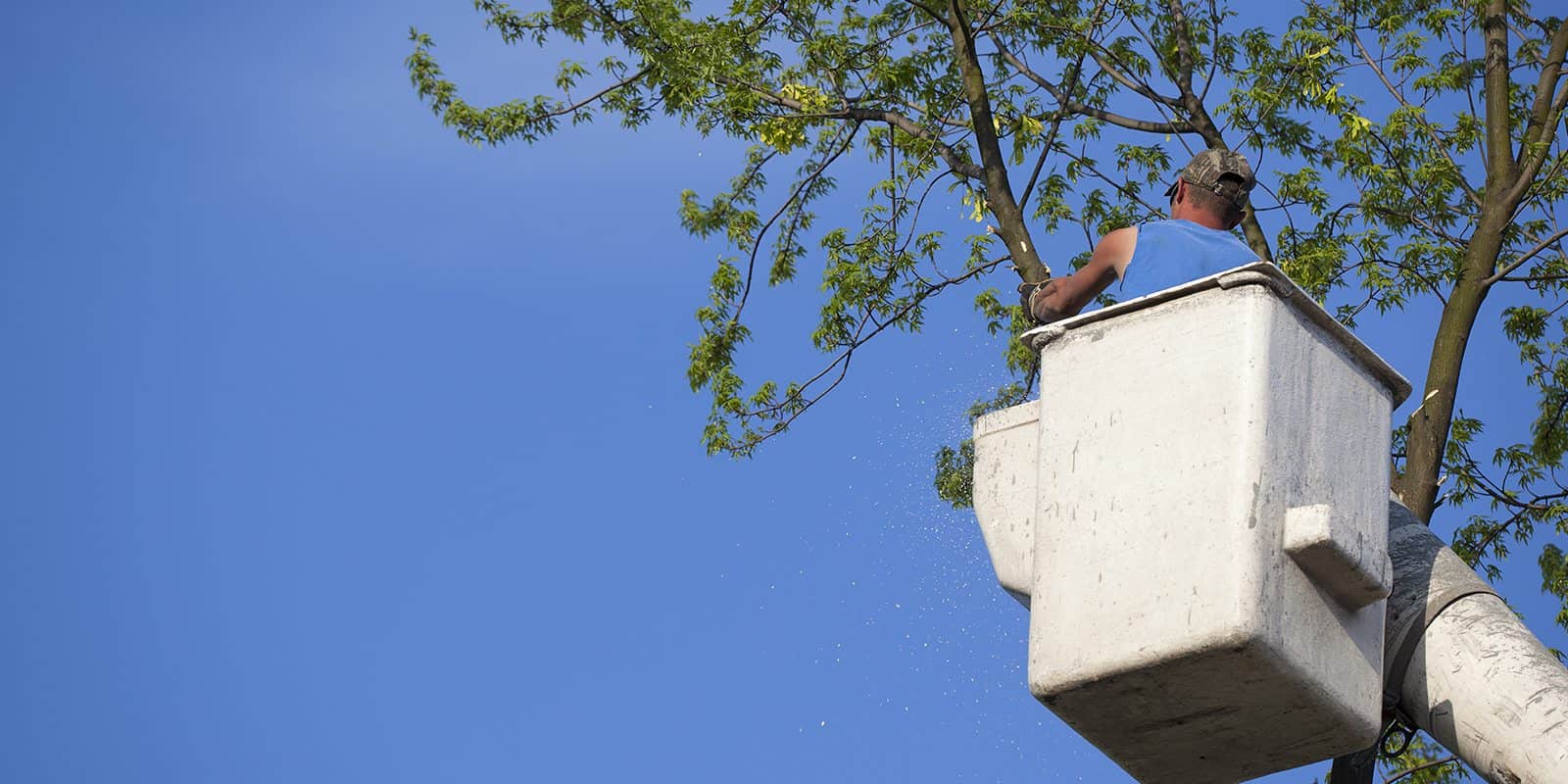
When a contractor quotes you a lot clearing job, that number should reflect a complete scope — not just the part that’s easy to price. Understanding what’s included (and what’s not) is the fastest way to evaluate competing bids fairly.
A thorough clearing job covers tree felling, stump grinding, brush chipping, debris removal or disposal, and some form of soil stabilization after the vegetation is gone. Each of those has a cost component. Stump grinding alone can be a significant add-on if it’s not built into the base quote. Debris hauling — getting the wood, chips, and brush off your property — can add $100 to $800 depending on volume. If a quote looks unusually low, the first thing to check is whether stump grinding and debris removal are included.
Lot clearing services also vary by project type. Residential clearing — a backyard overgrown after years of neglect, or a side lot being prepped for a garage addition — is a different job than clearing a commercial parcel for development. The equipment, crew size, and timeline differ accordingly. We handle both, and we’ll tell you upfront what’s in the scope and what isn’t.
Clearing a lot in a tight suburban Nassau County neighborhood — the kind of work common in places like Garden City, Hicksville, or Levittown — requires more precision than clearing open land. When you’re working close to a neighbor’s fence, a driveway, or a structure you want to keep intact, the job demands a different level of care. That’s where 22 years of tree work on Long Island matters — and why a general excavation company with a bulldozer isn’t always the right call.
How to Get a Land Clearing Estimate You Can Actually Use
Getting multiple quotes is smart. Getting quotes you can actually compare is the harder part.
The most useful thing you can do before any contractor shows up is know what you want the end result to look like. Do you want the stumps gone or just cut flush? Do you want the wood chips left on site or hauled away? Are you clearing for construction, or just reclaiming an overgrown area? The more specific you are about the outcome, the easier it is to hold different contractors to the same scope — and the more meaningful the comparison becomes.
When you’re evaluating bids, ask each contractor to break out the major line items: tree felling, stump grinding, debris disposal, and any permit coordination. A contractor who can’t or won’t itemize a quote is a contractor worth being cautious about. Transparency in the estimate usually reflects transparency in the work.
Also ask about insurance — specifically liability coverage and workers’ compensation. On a Nassau County property, an uninsured crew is a liability you’re absorbing. It’s not a detail to skip over. We’re fully licensed and insured, and we’ll tell you that upfront because we know it matters.
If you’ve gotten quotes that vary by thousands of dollars and you’re not sure why, that’s actually a reasonable situation to call us about. We’ve been giving free estimates across Nassau and Suffolk Counties for over two decades, and part of what we do is help homeowners understand what they’re looking at — not just hand them a number and walk away.
Getting Your Nassau County Land Clearing Project Started the Right Way
Land clearing on Long Island costs more than national averages suggest, involves more regulatory complexity than most homeowners expect, and requires a level of precision that not every contractor is equipped to deliver. None of that has to be overwhelming — it just means the homework you’re doing right now is worth it.
The short version: budget $2,800 to $4,500 per acre as a realistic Long Island baseline, understand what’s included in any quote before you compare them, and don’t skip the permit question just because it feels like a hassle. The fines for getting that wrong in Nassau County are real.
If you’re ready to get a clear, itemized estimate for your property — or you just want to talk through what your lot actually involves before committing to anything — Competition Tree, Inc. is available seven days a week and offers free estimates with no obligation. Reach out and we’ll take a look.
Article details:
- Published by:
- Competition Tree
- Published to:
- Last modified:
- August 7, 2026
Share:
Continue learning: