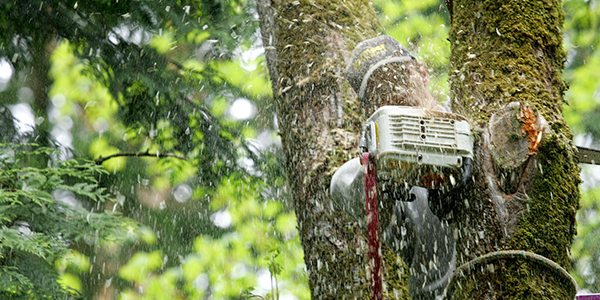
Tree Removal Prices vs. What Your Insurance Pays in Nassau County
A tree comes down after a nor'easter and suddenly you're wondering who pays. Here's what Nassau County homeowners actually need to know.
Share:
Summary:
A nor’easter rolls through Nassau County, and by morning there’s a 60-foot oak across your driveway. Your first call is probably to your insurance company — and your second thought is, “Wait, will they actually cover this?” The honest answer is: it depends on three things most homeowners don’t know to ask about. Insurance coverage for tree removal is narrower than most people expect, and the gap between what your policy pays and what removal actually costs can be significant. Here’s what you need to understand before you make any calls.
Does Homeowners Insurance Cover Down Trees?
The short answer is: sometimes. Standard homeowners insurance can cover tree removal, but only under a specific set of conditions — and the coverage limits are lower than most people realize.
The Insurance Information Institute puts it plainly: most policies cover tree removal only up to $500 to $1,000 per tree, and only when the tree hit an insured structure as a result of a covered peril like wind, lightning, or a winter ice storm. If the tree fell in your yard and didn’t damage your house, fence, or another covered structure, the removal cost is entirely yours.
That distinction — where the tree landed, not just that it fell — is what most homeowners in Nassau County miss.
Fallen Tree Insurance: The Three Scenarios That Determine Who Pays
Think of it as three separate situations, each with a different financial outcome.
The first scenario: a tree falls on your house, garage, or another insured structure during a covered storm event. In this case, your homeowners policy will likely cover the structural damage and contribute toward tree removal — but only up to the per-tree cap, which is typically $500 to $1,000 depending on your policy. If the actual removal costs more than that cap, you pay the difference. And if your deductible is $1,500, you may pay the entire removal cost out of pocket even in a “covered” event, because the removal bill never exceeds your deductible threshold.
The second scenario: a tree falls in your yard but doesn’t hit anything. No structure, no fence, no car. In this case, standard homeowners insurance provides no coverage for debris removal. The full cost of getting that tree off your lawn is on you.
The third scenario is the one people are most reluctant to think about: the tree that hasn’t fallen yet. You’ve noticed the dead oak in the back corner is leaning. Maybe a neighbor has mentioned it. You’re hoping a storm will eventually bring it down and turn it into an insurance claim. Here’s the problem — if an insurer determines that you knew a tree was dead or diseased and failed to address it, they can deny the subsequent damage claim on grounds of negligence. Waiting it out can cost you more than the removal would have.
Nassau County’s housing stock makes this especially relevant. Most of the county’s homes were built around 1955, and the trees planted alongside those homes — pin oaks, Norway maples, white pines — are now massive, aging specimens. They’re beautiful. They’re also increasingly vulnerable to the kind of saturated spring soil and sustained nor’easter winds that Long Island Sound and the Atlantic push through here every year. A tree that held through a 60-mph winter storm can come down in a 40-mph spring gust when the ground is waterlogged and the root system has nothing to grip.
Knowing which scenario you’re in before you call anyone — insurance company or tree service — is the most useful thing you can do.
Tree Damage Insurance: What Your Policy Almost Certainly Won't Cover
A few exclusions come up constantly in Nassau County, and they’re worth knowing before you assume your policy has you covered.
Preventive removal is never covered. If you hire a tree service to remove a dangerous or leaning tree before it falls, that cost is entirely out of pocket regardless of how obvious the hazard is. No standard homeowners policy covers removal of a tree that is still standing, even if it’s visibly dead or rotting. Every major insurer — Nationwide, Progressive, GEICO, and others — is consistent on this point.
Stump grinding is almost never covered. Unless stump removal is specifically required to complete a covered structural repair, it’s excluded. If you want the stump gone after a storm-related removal, plan to pay for it separately.
The neighbor’s tree scenario trips people up more than almost anything else. If your neighbor’s oak comes down on your fence or shed during a storm, most homeowners instinctively assume the neighbor’s insurance handles it. That’s not how it works. You file with your own policy. Your insurer may pursue the neighbor’s insurer later — but only if negligence can be proven, meaning your neighbor knew the tree was dead or damaged and ignored it. For the immediate cleanup and repair, you’re dealing with your own coverage, your own deductible, and your own timeline.
In Nassau County’s tight suburban neighborhoods — the kind you find in Freeport, Baldwin, Massapequa, and Garden City, where lots are close and mature trees hang over shared fence lines — this situation comes up constantly after major storms. Understanding it ahead of time means you’re not making financial decisions in a panic at 7am after a nor’easter.
One more thing: some policies set an aggregate limit for all trees removed after a single storm event, commonly $2,500 to $5,000 total. If a storm takes down three trees and each removal costs $1,200, you may hit that aggregate cap quickly. Check your policy before you assume each tree gets its own separate limit.
Tree Falling on Your House: What Insurance Covers and What Tree Removal Actually Costs
Even when insurance does cover part of a tree removal, it rarely covers all of it. That gap between what your policy pays and what the job actually costs is where understanding local tree removal prices becomes essential.
In Nassau County, tree removal prices typically range from $500 for smaller trees to $2,000 or more for large specimens near structures. For trees that require crane access, proximity work near power lines, or emergency response after a storm, costs can run higher. Knowing those numbers before you file a claim — or decide not to — helps you make a rational decision rather than a reactive one.
What Affects Tree Removal Prices in Nassau County
Tree removal pricing isn’t arbitrary, but it’s also not as simple as measuring the tree and multiplying by a flat rate. Several factors combine to determine what a job actually costs, and Nassau County’s specific conditions push some of those factors higher than the national averages you’ll find on general cost-guide sites.
Size is the most obvious factor. A small tree under 20 feet is a very different job from a 70-foot white pine. The equipment, crew time, and complexity scale significantly with height and trunk diameter.
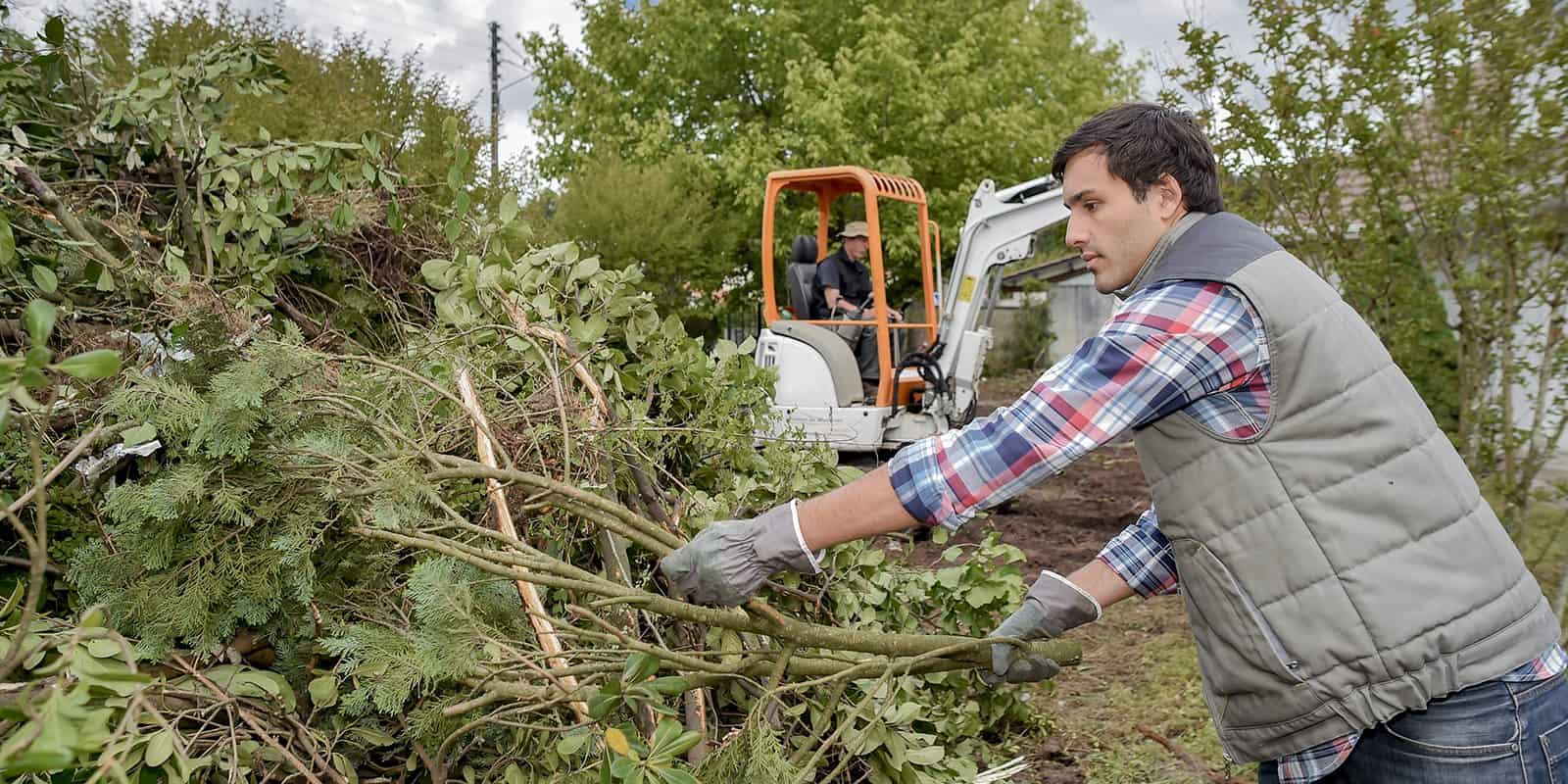
Location matters just as much. A tree standing in the middle of an open backyard is straightforward. A tree that’s leaning over a roof, wedged between two houses, or tangled in a power line requires specialized equipment, careful rigging, and significantly more time. That’s where a 50-inch aerial bucket becomes necessary rather than optional — and it’s part of what separates a professional operation from someone with a chainsaw and a pickup truck.
Emergency timing adds cost. A removal that can be scheduled a week out costs less than one that needs to happen tonight because a tree is resting on your roof and rain is in the forecast. Post-storm demand in Nassau County surges quickly, and availability becomes scarce fast. The companies that answer the phone at 2am after a nor’easter — and can actually show up — are worth understanding before you need them.
Cleanup and stump grinding affect the final number too. A complete job includes hauling every piece of debris off your property. If stump grinding is part of the scope, that’s typically a separate line item. Getting a written, itemized estimate before any work begins is the only way to know exactly what’s included and what isn’t — and it removes the uncertainty that makes post-storm decisions so stressful.
For context, the national average for tree removal sits around $750, but Nassau County’s higher cost of living, denser neighborhoods, and more complex removal conditions push local averages higher. Getting a real estimate for your specific tree and situation is more useful than any national benchmark.
How to Handle a Tree Damage Claim the Right Way
If a tree has already come down and you’re filing a claim, the steps you take in the first 24 to 48 hours matter more than most homeowners realize.
Document everything before anything is moved. Photograph the fallen tree, the damage it caused, the surrounding area, and any structures it contacted. Do this from multiple angles. Your insurance adjuster will need this documentation, and the more thorough it is, the smoother the claim process tends to go.
Notify your insurer promptly. Under New York State Department of Financial Services regulations, your insurer is required to acknowledge your claim within 15 business days of notice. The clock starts when you contact them — so don’t wait.
Get a written estimate from a licensed, insured tree service before authorizing any work. This serves two purposes: it gives you a real number to compare against your deductible and your policy’s removal cap, and it gives your adjuster the documentation they need to process the removal portion of your claim. A verbal estimate from a crew that showed up unsolicited after the storm is not the same thing.
Ask for a Certificate of Insurance before any crew sets foot on your property. Not a verbal assurance — the actual document. In New York State, if a tree crew without workers’ compensation coverage is injured on your property, state law can hold you personally responsible for their medical costs and lost wages. This is not a hypothetical risk. It happens, and it happens more often in the chaotic days after a major storm when fly-by-night operations flood the market.
The post-storm window in Nassau County — particularly after the kind of sustained nor’easters that push down Long Island Sound into communities like Great Neck, Oyster Bay, and Port Washington — is exactly when corners get cut and homeowners make expensive mistakes. Knowing what to ask for, and who can actually provide it, is the difference between a manageable situation and a compounding one.
Get a Tree Removal Estimate Before You Need One
Your insurance policy is not a tree removal plan. It may cover part of the cost under specific conditions, but the gap between what it pays and what removal actually costs is real — and in Nassau County, where aging trees and close-set neighborhoods make storm damage a near-annual event, that gap is worth understanding before a tree comes down.
Whether you have a tree that already fell, one you’ve been watching with concern, or you simply want to know what removal would cost before you need to make a fast decision, a free written estimate removes the uncertainty. You’ll know the actual number, what’s included, and whether filing a claim even makes sense given your deductible.
We’ve been working in Nassau County for over 22 years. If you have questions about a tree on your property — or one that’s already down — reach out and we’ll take a look.
Article details:
- Published by:
- Competition Tree
- Published to:
- Last modified:
- August 12, 2026
Share:
Continue learning: